
At Clarkston Dental Care, we offer restorative dentistry in Clarkston, MI, and the surrounding communities. Dr. Michael Sesi, Dr. Jordan Rabban, and their team can restore your smile if you suffer from missing or damaged teeth. Restoring the smiles of patients with complex oral health problems is one of our specialties.
Restorative dentistry doesn’t only treat your teeth. We also treat patients with TMJ disorders and gum disease. Our full menu of restorative dental solutions can help you regain your oral health. Our dentists can replace missing teeth, address bite disorders, fix dental damage, and reverse gum infections. Additionally, we provide cosmetic and general dental services to the public in Clarkston, Michigan.
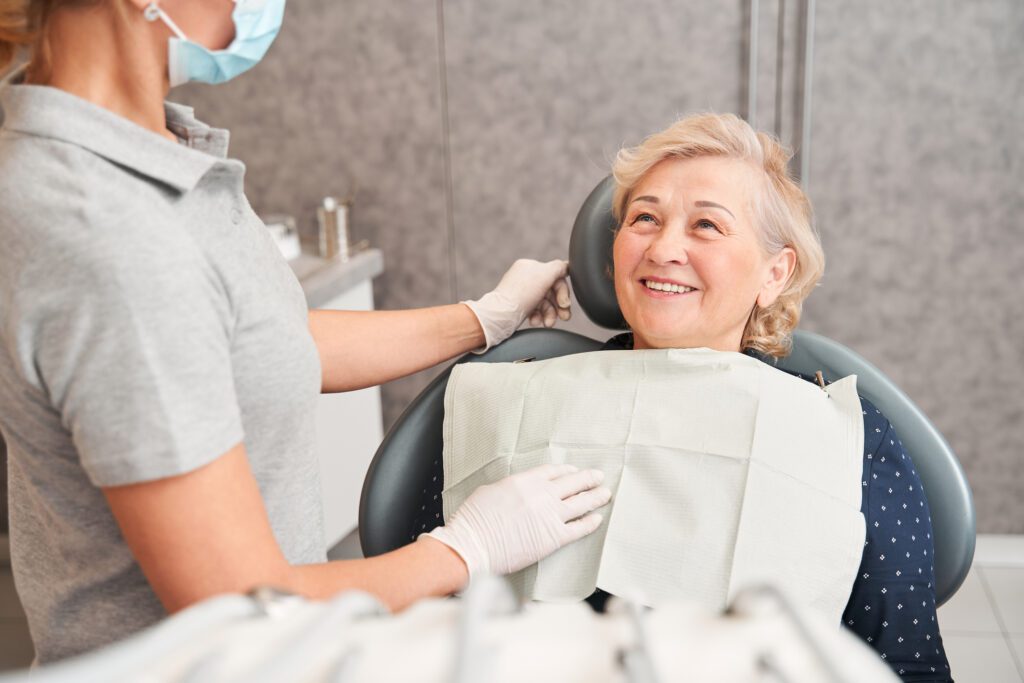
Restorative Dentistry in Clarkston, MI
Clarkston Dental Care offers many restorative dental treatments to help patients restore their smiles. A dentist will examine your teeth, gums, and bite to determine the appropriate treatment. Then, they will suggest a personalized dental care plan that fits your budget and helps you meet your needs and goals. We offer a range of restorative dentistry treatments to renew the full function and health of your smile, including:
Dental Bridge
A dental bridge replaces one to four missing teeth on the top or bottom arch. It is a fixed dental restoration that traditionally uses natural teeth for support. These teeth must be permanently reduced in size to accommodate the prosthesis. However, we can also use two or more dental implants to secure a dental bridge. Implant-supported dental bridges do not need any support from adjacent teeth. To learn more about the dental bridge process, see Dental Bridge.
Tooth Crowns
A dental crown is a porcelain ceramic cap that fully encases a single tooth. Its purpose is to give the tooth added strength and protection from further damage. It will also make the tooth more aesthetically pleasing. Your dentist will suggest a dental crown when a tooth suffers from severe decay, damage, or infection. We may also recommend dental crowns for patients after root canals. To learn more about the dental crown process, see Dental Crown.
Dental Implants
Implants are an effective, modern restorative treatment that can replace missing teeth. Dental implants can help restore a single missing tooth, several missing teeth, or a whole arch of missing teeth. An implant fixture is made from titanium, a biocompatible material that will fuse with human bone.
Teeth implants are surgically placed in the jawbone, where they will fuse to the bone and create a stable foundation to support dental restorations. Depending on how many teeth you have, your dental implants will support a dental crown, dental bridge, or denture. To learn more about your dental implant options, see Dental Implants.
Dentures & Partials
Full dentures are designed to replace a whole arch of missing teeth, while partial dentures replace multiple missing teeth on the arch. Removable dental restorations help restore some chewing function, speech, and aesthetics, and will help keep the remaining teeth from shifting.
Dentures are false teeth fused to a framework made of metal and acrylic. They remain in place by clasping onto the remaining teeth or by suction. Sometimes, denture adhesive is needed. To learn more about the denture-making process, see Dentures and Partials.
Periodontal Disease Treatment
Gum disease may be a common dental problem, but it can be highly damaging to the smile. It is caused by a lack of proper oral hygiene. When bacteria are removed from your mouth daily, it creates inflammation and infections in your gums.
Without prompt treatment, this disease will progress and lead to permanent damage. Over time, gum recession and tooth loss are inevitable. We offer periodontal therapy to remove decay-causing bacteria and restore the gums. To learn more about our gum disease treatments, see Periodontal Disease Treatment.
TMJ Treatment
TMJ is caused by injuries or stress to the temporomandibular joints, which connect the skull to the jawbone. These disorders are highly painful and uncomfortable for patients. Many patients with TMD clench and grind their teeth unconsciously.
Wearing a custom nightguard protects teeth and alleviates jaw joint and muscle pressure. Our TMJ treatment can also help stop further wear to the teeth and jaw. To learn more about the signs and symptoms of TMJ disorders, see TMJ Treatment.
Restorative Dental FAQs
Read answers to these commonly asked questions to learn more about your restorative dental options. If you have more questions or concerns, please contact us during regular business hours. You can also schedule a consultation.
How does restorative dentistry differ from cosmetic dentistry?
While both fields often overlap, restorative dentistry primarily concerns function and health. Cosmetic dentistry focuses on enhancing the appearance of teeth, such as whitening or reshaping. For example, a crown may be used in restorative dentistry to fix a broken tooth, whereas in cosmetic dentistry, veneers may be used to enhance appearance. However, many restorative procedures also offer aesthetic benefits.
Who needs restorative dental care?
Anyone with cavities, broken teeth, missing teeth, or oral infections may benefit from restorative dentistry. It’s also helpful for patients with worn teeth due to grinding or age. Restorative care is essential for maintaining oral health and avoiding more complex problems in the future. Early intervention often results in less invasive and more affordable treatment.
Does insurance cover restorative procedures?
Most dental insurance plans cover restorative treatments that are medically necessary, such as fillings, crowns, or extractions. Cosmetic procedures, like teeth whitening or veneers, may not be covered. It’s best to check with your provider to understand your coverage and any out-of-pocket costs.
What are the risks of not getting restorative treatment?
Delaying treatment can worsen dental problems such as infection, tooth loss, and jawbone deterioration. What starts as a small cavity can become a larger issue requiring more invasive and expensive treatment. Missing teeth can affect your bite and appearance and lead to jaw pain or speech issues. Timely restorative care helps prevent these complications.
Can children receive restorative dental care?
Children can benefit from restorative treatments like fillings, crowns, or space maintainers. Pediatric restorative care helps preserve baby teeth until they naturally fall out and ensures healthy development of permanent teeth. Treating cavities or injuries early helps avoid pain and more serious problems. We may also use fluoride treatments and sealants for added protection.
How can I prevent needing restorative dentistry?
Good oral hygiene, including brushing and flossing daily, is the best way to prevent dental problems. Regular dental checkups allow for early detection and treatment of issues. Limiting sugary foods and drinks and wearing a mouthguard if you grind your teeth can also help. Prevention is key to maintaining a healthy, functional smile.
Restore Your Smile with Restorative Dentistry in Clarkston, MI
Do you need to address functional problems with your smile? Are you looking for a way to treat multiple dental problems under one roof? Call our dental office today at 248-625-5511. You can also request an appointment with us online. Clarkston Dental Care serves patients in Clarkston, Waterford, and the surrounding communities.